Nirvana Lab

Home / Blog / Digital Transformation in Healthcare in 2024
Table of Contents

Digital Transformation in Healthcare in 2024

Digital Transformation in Healthcare in 2024

Digital transformation in healthcare is reshaping the industry in ways we never imagined. From faster diagnoses to personalized treatments, technology is making healthcare more efficient and accessible. But what exactly is digital transformation, and how is it changing how doctors and hospitals care for patients?  


In this blog, we’ll explore the exciting advancements driving this revolution and what it means for the future of healthcare. Curious to learn how these innovations might affect you or your loved ones? Let’s get started. 

What is Digital Transformation in Healthcare?

Digital transformation in healthcare harnesses cutting-edge technologies to empower medical professionals, improve patient care, accelerate drug discovery, streamline operations, and make on-demand care more accessible.

Breakthrough innovations like electronic health records, virtual appointments, telemedicine, software as a medical device (SaMD), and AI-powered medical devices are revolutionizing the healthcare industry.

These advancements are transforming patient interactions with healthcare providers, improving how information is shared with suppliers, and influencing decisions related to treatment plans.
Benefits of Digital Transformation in Healthcare

By now, you likely recognize how digital transformation can help healthcare organizations create interconnected processes and systems for patients and medical staff, such as Software as a Medical Device (SaMD).

This technology enables more efficient and accurate delivery of critical treatments and services. With that in mind, let’s explore the key benefits for healthcare companies.

Benefits of Digital Transformation in Healthcare

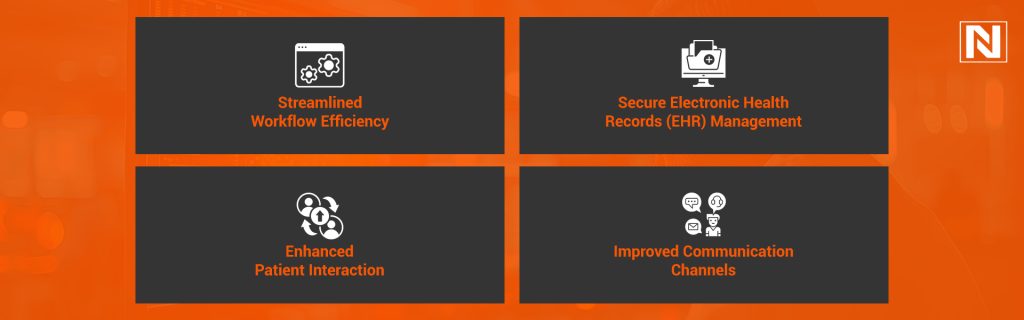
1. Streamlined Workflow Efficiency

Digital healthcare solutions significantly reduce paperwork and expedite patient examination processes. They offer a seamless, efficient way to access accurate patient health records, saving time and improving overall workflow.

2. Enhanced Patient Interaction

Through digital transformation, healthcare providers can communicate more effectively with patients using chat and video call platforms, fostering better engagement and care.

3. Secure Electronic Health Records (EHR) Management

The EMH platform ensures encrypted access to patient health data, enabling secure data sharing with labs and specialists.

4. Improved Communication Channels

With advanced communication technologies, healthcare organizations can ensure faster and more accurate diagnoses, quicker data transmission, and better internal communication for improved patient care.

Digital healthcare transformation offers patients a range of significant benefits:

1. Enhanced Health

Monitoring With real-time tracking of key health metrics through wearables and cutting-edge devices, digital transformation allows for more precise and proactive health monitoring.

2. Greater Convenience

Scheduling appointments has never been easier; patients can now book their visits from their homes and select the most suitable date and time via smart devices.

3. Improved Communication

Prescriptions and treatment plans can be shared digitally, and professional healthcare services are accessible online. Patients can quickly consult with their doctors through video calls, eliminating the need for in-person visits.

4. Tailored Healthcare Experience

Digital services enable a more personalized healthcare journey, delivering accurate diagnoses, treatment schedules, and timely medication reminders, all customized to each patient's needs.

Real-World Examples and Use Cases of Digital Healthcare Solutions

The primary objective of healthcare digital transformation is to integrate cutting-edge solutions across all sectors, streamlining operations, ensuring compliance, enhancing patient care, and cutting costs.

To grasp how digital transformation boosts efficiency in healthcare, let's explore notable use cases and real-life examples of digital solutions in action.

Real-World Examples and Use Cases of Digital Healthcare Solutions

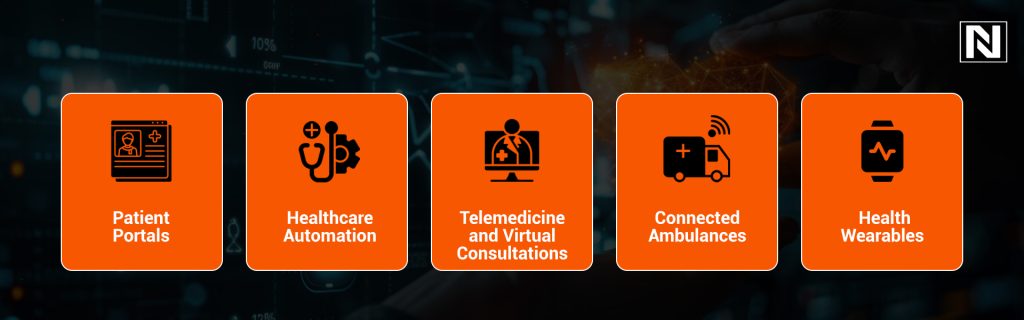
1. Patient Portals

Patient portals are another essential advancement in digital healthcare. They empower individuals to access their health records, review prescriptions quickly, and book doctor appointments. A survey shows that 82% of healthcare providers rank patient portals among their top tools for patient engagement.

These portals simplify access to electronic health records, reducing the workload for medical staff and allowing patients to easily share data with multiple providers, eliminating the need for manual transfers. FollowMyHealth is a great example, providing a platform where patients can schedule appointments, manage prescriptions, and share health information seamlessly.

2. Healthcare Automation

Automation is revolutionizing the healthcare industry. In 2023, the global AI market was valued at USD 538.13 billion. It is projected to soar to approximately USD 2,575.16 billion by 2032, growing at a compound annual growth rate (CAGR) of 19% over the forecast period.

This data indicates that AI will play a significant role in healthcare, automating tasks to streamline workflows and enhance efficiency.

Automation allows hospitals to achieve more with fewer staff and reduced resources, leading to time and cost savings. For patients, automation improves the quality of care and shortens hospital stays.

3. Telemedicine and Virtual Consultations

Digital transformation in healthcare is most evident in the rapid increase in virtual doctor visits. The COVID-19 pandemic in 2020 underscored the critical role of telemedicine as accessing in-person care became increasingly challenging. Consequently, teleconsultations surged, allowing patients to book medical appointments and consult with doctors remotely via video, audio, or messaging platforms.

Apps like Zocdoc and Patient Access make it easier for patients to find doctors quickly, schedule virtual visits at their convenience, and monitor their health. This growing telemedicine trend enables those in remote or rural areas to receive timely medical attention, offering a more time- and cost-efficient solution than traditional hospital visits.

4. Connected Ambulances

Connected ambulances are transforming emergency care by serving as extensions of the hospital. They collect and transmit patients' vital data, gathered through wearables, sensors, and HD cameras, directly to healthcare providers en route to the hospital.

This system enables doctors to access crucial information and prepare for necessary procedures before the patient arrives, reducing delays and potentially improving outcomes in critical situations.

5. Health Wearables

Health wearables have become powerful tools in modern healthcare. They are designed to monitor users' health metrics and fitness levels while transmitting real-time data to healthcare providers. With a growing emphasis on preventive care, patients are more proactive about tracking their health indicators rather than waiting for illness.

This shift has driven a significant rise in wearable medical devices, which now offer real-time tracking of various health parameters. Digital transformation in healthcare has made this technology more accessible, providing accurate and timely health insights.

DID YOU KNOW

Research by Deloitte reveals that approximately 92% of healthcare professionals and institutions have seen improved performance through digital transformation. 


According to Global Market Insights, the Digital Health Market was valued at over USD 233.5 billion in 2022 and is projected to grow at a compound annual growth rate (CAGR) of 15% from 2023 to 2032. The rise in smartphone, tablet, and mobile platform usage drives this growth. 

Top Digital Transformation Trends in Healthcare

Digital transformation in healthcare is driven by various objectives. Based on these goals, here are the top 5 trends shaping the future of digital transformation in the industry:

Top Digital Transformation Trends in Healthcare

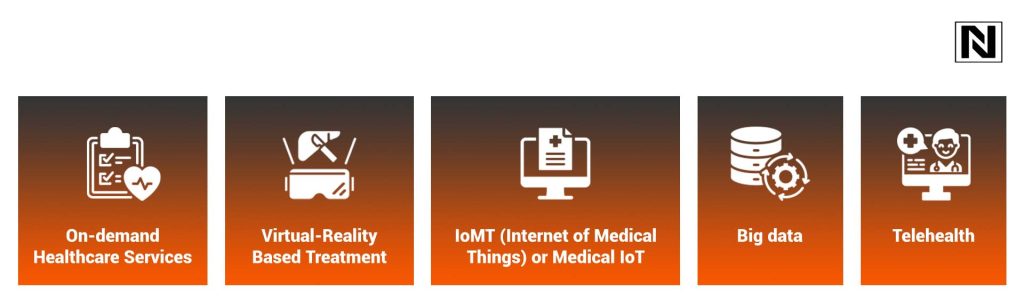
1. On-demand Healthcare Services

People now seek healthcare services through mobile apps, much like any on-demand application. This trend benefits patients and healthcare institutions, as it allows physicians to provide care based on their availability using health-on-demand apps.

2. Big data

The digital healthcare market is poised for significant growth, driven by the power of big data, as the global healthcare industry processes vast amounts of data every hour. According to Globe News Wire, the global big data market, valued at $337.03 billion in 2023, is projected to nearly double, reaching $662.63 billion by 2028, with a CAGR of 14.48% during the forecast period.

Big data's ability to transform both structured and unstructured data into valuable insights offers numerous benefits.

3. Virtual-Reality Based Treatment

Virtual reality has become an integral part of the digital healthcare landscape, proving to be effective in treating chronic pain, particularly in countries grappling with the drug crisis. Beyond chronic pain, VR technology is also being utilized to treat PTSD, stress, and stroke.

Medical professionals, including residents and doctors, increasingly rely on VR simulations to sharpen their skills and plan complex surgeries.

There is widespread confidence in virtual reality as a tool for improving medical care and treatments, from healthcare providers to pharmaceutical companies.

4. IoMT (Internet of Medical Things) or Medical IoT

IoMT is rapidly emerging as a leading trend in the healthcare industry. Despite its complexity and the numerous factors that must be considered, digital transformation solutions harness Medical IoT to streamline essential functions, from monitoring to automating processes.

5. Telehealth

Telehealth is revolutionizing how patients connect with healthcare providers. Key technologies driving this change include telemedicine, mobile health (mHealth) apps, video conferencing, and remote patient monitoring.

The pandemic significantly accelerated telehealth adoption by reducing unnecessary physical interactions while enabling patients to manage their health remotely. When integrated with IoT devices and wearables, telehealth becomes even more powerful, allowing real-time monitoring of high-risk patients through activity data tracking.

Why Choose Nirvana Lab for Digital Transformation in Healthcare?

At Nirvana Lab, we are a prominent healthcare software development company committed to revolutionizing healthcare through digital transformation. We offer customized solutions for the healthcare sector, seamlessly integrating cloud services, data management, and advanced analytics to meet your unique needs.

We empower healthcare providers with tools to enhance patient outcomes, streamline processes, and ensure regulatory compliance. Our expert team collaborates closely with clients to implement strategies that drive innovation and growth.

Choosing Nirvana Lab means partnering with a trusted ally dedicated to helping your organization thrive in today’s digital age.

Frequently Asked Questions

What is digital transformation in healthcare?

Digital transformation in healthcare involves using advanced technologies to improve patient care, streamline operations, and enhance the healthcare experience. It includes innovations like electronic health records, telemedicine, and AI-driven medical devices.

Key benefits include streamlined workflows, enhanced patient interactions, secure electronic health record management, and improved communication channels. These advancements lead to better patient care and operational efficiency. 

Telemedicine is a crucial aspect of digital transformation, allowing patients to consult with doctors remotely via video or audio calls. This approach increases accessibility, especially for those in rural areas, and reduces the need for in-person visits.

Patient portals empower individuals to easily access their health records, manage prescriptions, and schedule appointments. They enhance patient engagement and reduce administrative burdens on healthcare staff.

Nirvana Lab specializes in healthcare software development, offering tailored solutions that enhance patient outcomes and streamline processes. Their expert team collaborates closely with clients to implement innovative strategies that drive growth and compliance.

Author